
Mabrouka Khedhir — Cosmos Media — Tunisia / Translation by Amal Boukteb
© Originally published in French and Arabic on 27 April 2026
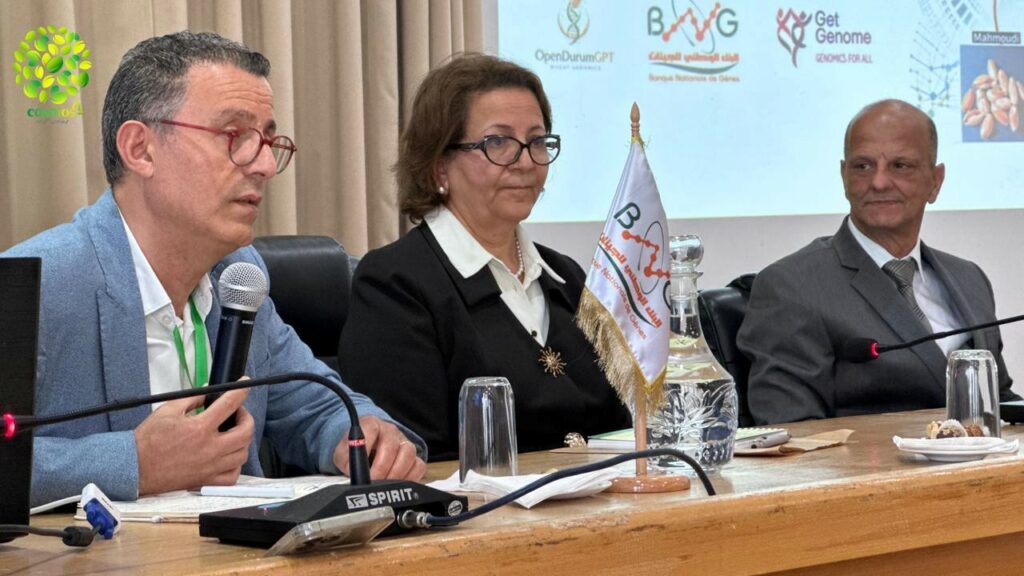
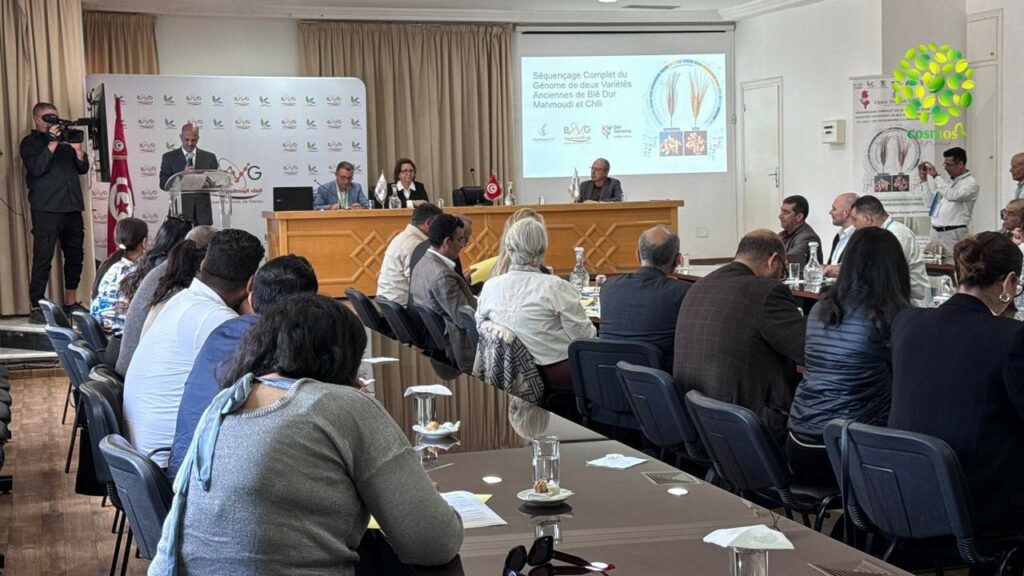
At the headquarters of Tunisia’s National Gene Bank, the gathering was anything but an ordinary press conference. It was a turning point — a moment that redefined the relationship between agricultural heritage and scientific innovation. In the very place where the memory of seeds is preserved and biological diversity is protected, researchers and experts came together to announce an unprecedented scientific breakthrough: the complete decoding of the genomes of two ancient Tunisian durum wheat varieties, Mahmoudi and Chili.
The event was not limited to celebrating research results. It marked the emergence of a new vision for agriculture in Tunisia — a vision that brings together local knowledge and open science, and places Tunisian researchers at the heart of global innovation.
From the Fields to the Laboratories: The Story of a Wheat That Carries National Memory
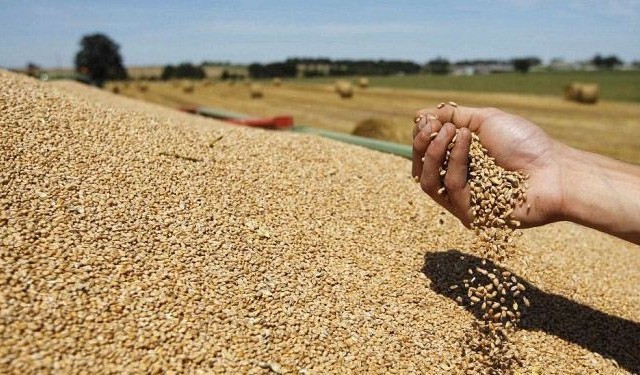
Durum wheat in Tunisia is rooted in a centuries-old history, intimately tied to the country’s culinary and cultural identity. The Mahmoudi and Chili varieties are not simply agricultural crops — they are living archives of Tunisian peasant memory, shaped by generations of know-how and endowed with a remarkable ability to adapt to harsh climatic conditions, as the experts gathered at the National Gene Bank reminded their audience.
Today, thanks to modern Whole-Genome Sequencing technologies, it is possible to read this memory at the level of DNA itself, and to understand the precise mechanisms that give these varieties their resistance to drought, heat, and disease.
Open DurumGPT: When Data Becomes a Collective Force
At the heart of this transformation stands the Open DurumGPT project, a pioneering initiative in the field of open science. The platform does more than simply share genomic data: it redefines the very concept of scientific cooperation by making the resources freely available to researchers around the world.
According to Mouez Hanin, professor at the Higher Institute of Biotechnology of the University of Sfax and project coordinator: “The sequencing of the genomes of these two varieties represents a major step forward. They will play a central role in developing wheat that is more resistant to climate change, while preserving the know-how of the Tunisian farmers who have stewarded these varieties for centuries. We need these advances, particularly to face drought, rising temperatures, and salinity.”
He added that these results go beyond the purely academic realm: they contribute directly to national food security by improving both the productivity and the quality of cereals.
He also stressed that this work is the outcome of an integration between modern scientific knowledge and ancestral agricultural expertise. For centuries, Tunisian farmers have played an essential role in preserving and adapting these local varieties to the country’s soils and climate. The project therefore aims to give value to this agricultural heritage by integrating it into modern genetic-selection programs, securing the durability of production and protecting biodiversity in the face of mounting climate challenges in Tunisia and across the Mediterranean basin.
Along the same lines, Mouez Hanin emphasized a major strategic shift: the move from knowledge as closed property to shared knowledge, and from isolated research to collaborative innovation.
Science in the Service of Food Security
This breakthrough does not stay confined to the laboratory. It is part of a world that is increasingly vulnerable, marked by accelerating climate change, the dwindling of water resources, and the relentless rise in food demand.
In this context, understanding the genome becomes an essential strategic tool. It makes it possible to identify the genes responsible for resistance to drought and disease — and even to improve the nutritional value of wheat. This is no longer just science: it is a concrete hope embodied in “climate-smart” varieties capable of withstanding and adapting to extreme environments.
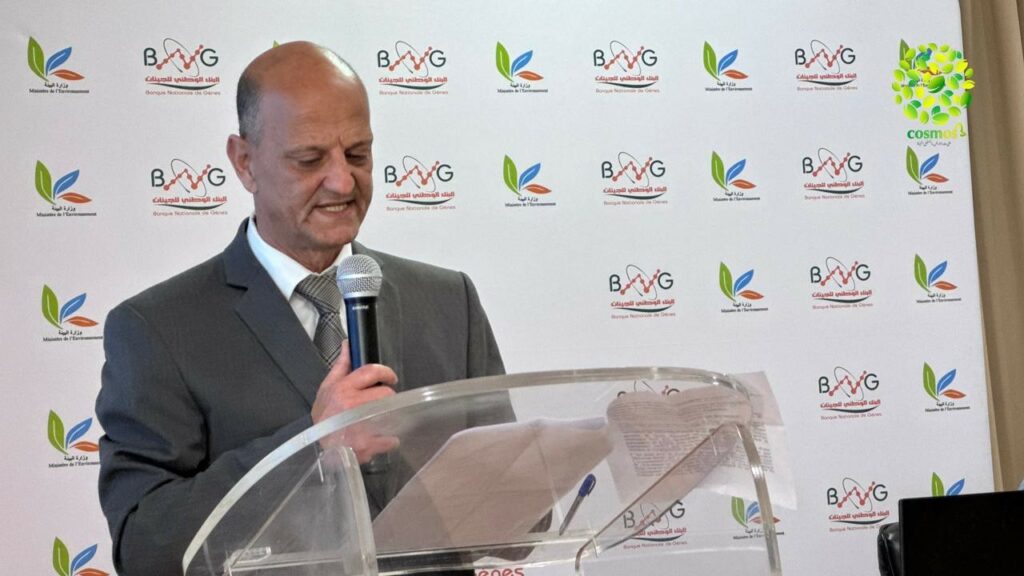
It was in this framework that Mohamed Ali Ben Temessek, Director General of the National Gene Bank, gave the breakthrough its strategic dimension. He underlined that this work is not limited to understanding the genetic past of these varieties: it sketches the contours of the future, affirming that identifying the unique genetic features of these two varieties provides a roadmap for developing wheat adapted to climatic pressures.
He added that the true value of this work lies in its capacity to transform local genetic resources from a simply preserved heritage into an active force for food security — making Tunisian genes part of the global solution to climate change.
Between Heritage and Identity: Wheat as a Civilizational Symbol
The cultural dimension was not absent from this gathering. It served as a thread linking science to memory, the laboratory to the field.
As researcher Brandon Wolff, professor at King Abdullah University of Science and Technology in Saudi Arabia, put it: “Durum wheat has shaped Tunisia’s fields, kitchens, and culture for centuries. Sequencing these genomes makes it possible to preserve a living heritage while strengthening the resilience of a crop that is essential to the country’s national identity.”
In this sense, the achievement goes beyond the scientific frame to become an act of preserving collective memory. Each ear of wheat embodies family stories, seasonal traditions, and culinary knowledge passed down through generations. Reading the genome therefore means not only deciphering biological information, but also reconnecting with a deep cultural history.
A Genetic Treasure Facing the Future
For his part, Sophien Kamoun, professor and group leader at The Sainsbury Laboratory in Norwich (United Kingdom), insisted on the strategic value of these varieties: “Mahmoudi and Chili are a true living treasure of Tunisian civilization… they form the foundation of the analyses that will allow us to develop the next generation of wheat resistant to climate change.”
Mahmoudi and Chili are among the oldest Tunisian durum wheat varieties. Mahmoudi is recognized for its adaptation to semi-arid zones and the quality of its semolina, used in couscous and traditional pasta. Chili stands out for its balanced growth cycle and good resistance to environmental constraints, contributing to the genetic diversity of local wheat.
These varieties are genuine living gene banks, carrying genes essential for tolerance to heat, drought, and poor soils. Their sequencing now makes it possible to harness those traits in genetic-improvement programs, in order to create more productive and resilient varieties.
In this context, Dr. Zahra Lili Chabaane, Director of the Institution of Agricultural Research and Higher Education, stressed that the project fits into an integrated national vision linking scientific research, academic training, and the needs of the agricultural sector. She emphasized that sequencing the genomes of local cereals represents a major shift in our relationship with genetic resources: it is no longer simply about conserving them, but about understanding and giving them value.
She also highlighted the training of a new generation of researchers capable of mobilizing genetics in the service of sustainable agriculture, while strengthening the bridges between universities, research centers, and professional stakeholders. The aim is to translate these results into concrete solutions for Tunisian farmers and, in time, into public policies that support food sovereignty.
She concluded that this moment marks a milestone that goes beyond a scientific announcement: it positions Tunisia on the global map of agricultural research not merely as a custodian of heritage, but as an actor of innovation.
The National Gene Bank: Guardian of a Living Memory
Tunisia’s National Gene Bank is a strategic pillar in the preservation of genetic resources. Since its creation in 2007, it has played a central role in collecting, conserving, and documenting thousands of plant and animal genetic accessions, with a particular focus on local cereals.
It combines advanced conservation methods, from long-term low-temperature storage to in-situ conservation, ensuring the durability of genetic diversity. In the cereal domain, it organizes collection missions, carries out morphological and molecular characterizations, and makes these resources available to researchers and breeding programs.
Beyond its scientific role, it acts as an instrument of food sovereignty by reducing dependence on imported seeds and giving value to local varieties. In a context of climate change and unstable supply chains, it stands as a true “living memory” in the service of the future.
Tunisia’s Cereal Sector: Strategic Importance and Structural Challenges
The cereal sector is one of the pillars of Tunisian agriculture. Durum wheat occupies a central place in it, particularly in national cuisine — couscous and pasta — alongside bread wheat, barley, and triticale. Cultivated areas range between 1.2 and 1.5 million hectares, mostly in the north and northwest of the country.
Despite its strategic importance, the sector faces strong constraints: rainfall dependence, low yields, fragmentation of holdings, high input costs, and growing pressure on water resources. Production varies sharply from year to year, which deepens dependence on imports.
The Production–Consumption Deficit: A Fragile Equation
Tunisia faces a structural deficit between cereal production and consumption, which forces it to import substantial quantities — particularly of bread wheat.
It is essential, however, to distinguish between cereal imports and seed production. While the country relies on international markets for consumption, it maintains a national seed production system, anchored in a public framework of selection and genetic improvement.
As Zahra Lili Chabaane emphasized, true sovereignty lies in the capacity to produce one’s own seeds adapted to local conditions.
Tunisian Durum Wheat: An Asset Yet to Be Fully Tapped
For Mouez Hanin, Tunisian durum wheat is an under-exploited genetic heritage. Traditional varieties hold exceptional qualities of resistance and nutritional quality, but their potential remains limited by a lack of investment in applied research.
Genome sequencing now makes it possible to move from empirical selection to targeted selection, accelerating the creation of new, more resilient and more productive varieties through techniques such as marker-assisted selection.
Agriculture Facing a New Climate
In a context of rapid climate change, Tunisian agriculture is entering a critical phase. Seasons are becoming unpredictable, natural resources are growing scarce, and the room for adaptation is shrinking.
Yet within this fragility, new prospects are emerging — those of an agriculture grounded in genetic memory, science, and collaboration between researchers and farmers. Local varieties become tools for adaptation, and genomics a lever for transformation.
A new food sovereignty is taking shape — built not only on production, but on knowledge, on the valorization of local resources, and on shared innovation.
And so, from a single seed, the story of a country is told… and from an invisible gene, the future of its food is built.
This article is a translation and adaptation of press coverage originally published in French and Arabic by Mabrouka Khedhir for Cosmos Media Tunisia, an independent environmental journalism platform, as part of their reporting on the official announcement of the Open Durum Genome Project Tunisia (DurumGPT). The event took place on Wednesday, 24 April 2026, at the headquarters of Tunisia’s National Gene Bank in Tunis.